Vieshful: a felt wall for organising
Twelve felt tiles that turn a patch of wall into a surface for pinning notes, cards and references in plain view, beside the desk.
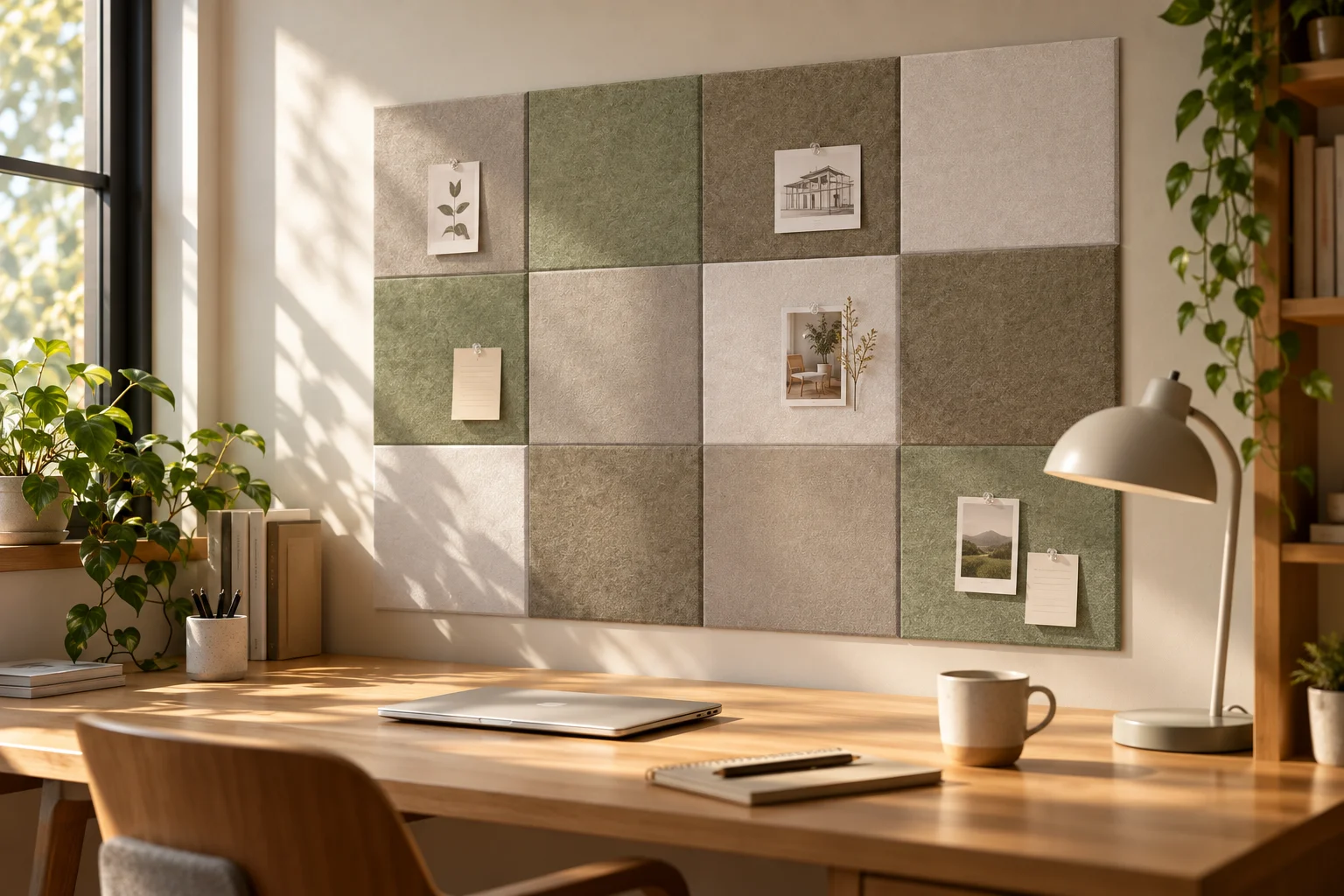
Above almost every desk there is an empty wall. Meanwhile, the information we use daily —a note, a date, a card, a reference image— lives scattered: in drawers, on the phone, in piles of paper. Giving that information a physical, visible place is one of the simplest ways to order a workspace. That is what this article is about.
The empty wall above the desk
The vertical surface in front of us is usually wasted —not for lack of things to put on it, but for lack of a place meant for them. When there's no surface to pin what matters, information piles up horizontally, on the desk, or disappears from view.
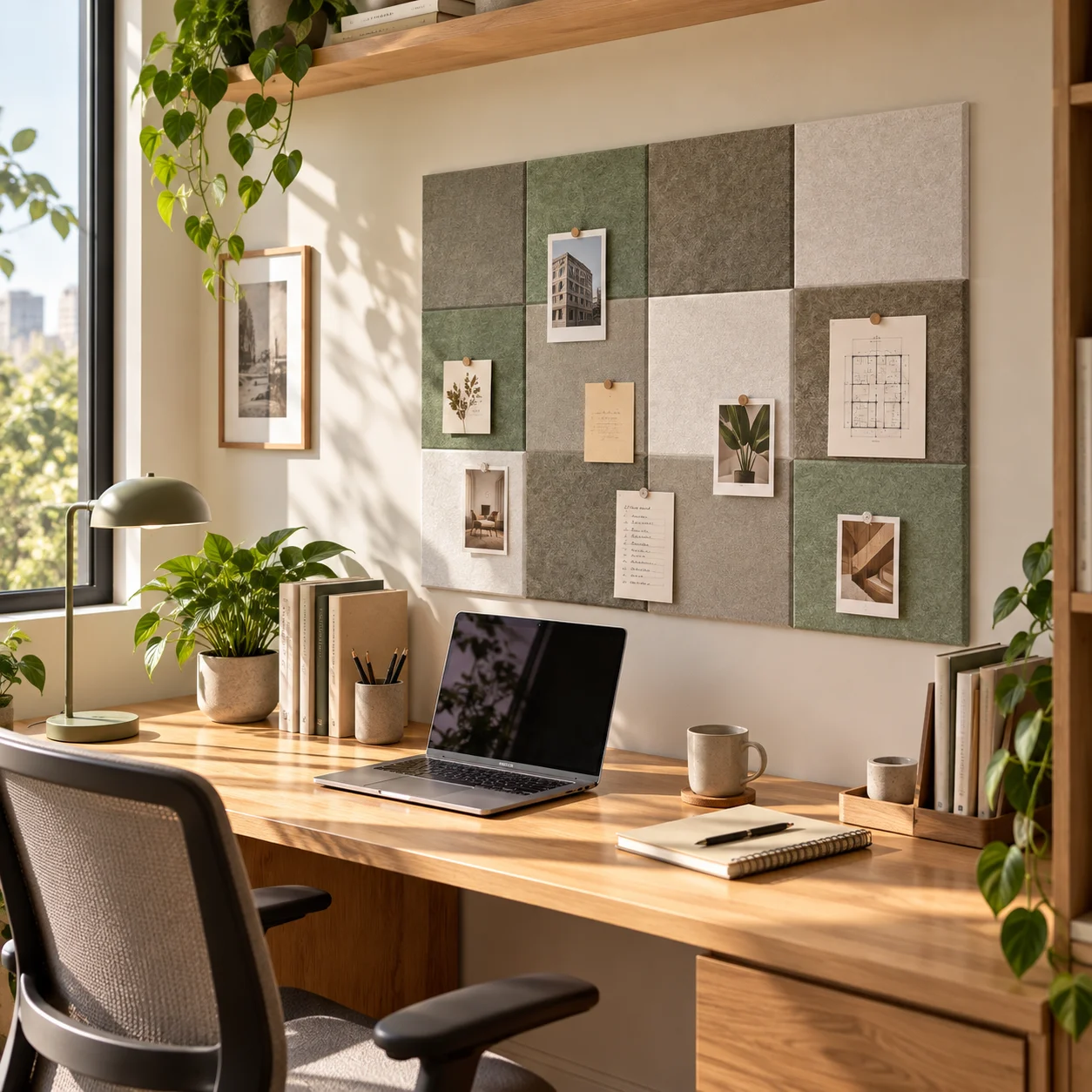
Organising light information is, above all, giving it a place. A surface in plain view where you pin notes and cards turns the scattered into something you can take in at a glance. You don't need a complex system: you need a spot.
Information in plain view
Keeping references in view changes how they're used: what's pinned up gets consulted; what's filed away is forgotten. A wall surface gathers notes, dates and reference images on a single plane and keeps them accessible without taking up the desk. It is organisation in the most literal sense: each thing in its place and in view.
A surface, not a single board
The advantage of working with pieces rather than a closed board is freedom of composition. Twelve square tiles let you cover the patch of wall you want, in the shape you want: a strip, a square, a grid that grows over time. The surface adapts to the space, not the other way round.
Vieshful tiles
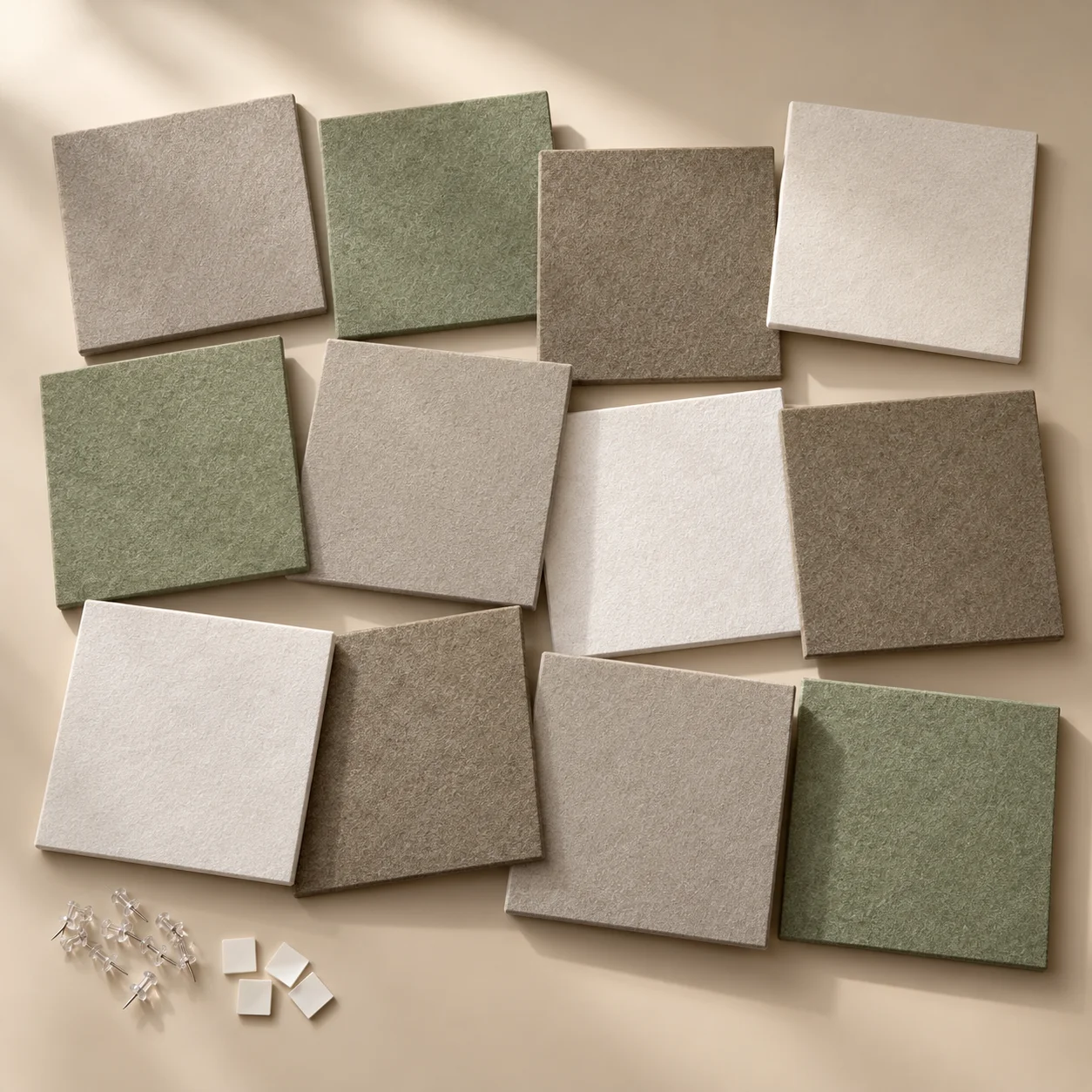
The Vieshful felt tiles come as a set of twelve high-density felt pieces, in a muted Morandi palette. Each piece measures roughly 12 × 12 inches and about 9 mm thick. The set includes double-sided adhesive pads to fix them to the wall and transparent push pins to hold paper. The surface is made for notes, cards and light references.
Each piece measures about 12 × 12 inches and roughly 9 mm thick. Twelve pieces let you compose a surface sized to the wall, from a discreet strip to a wide grid.
What it isn't
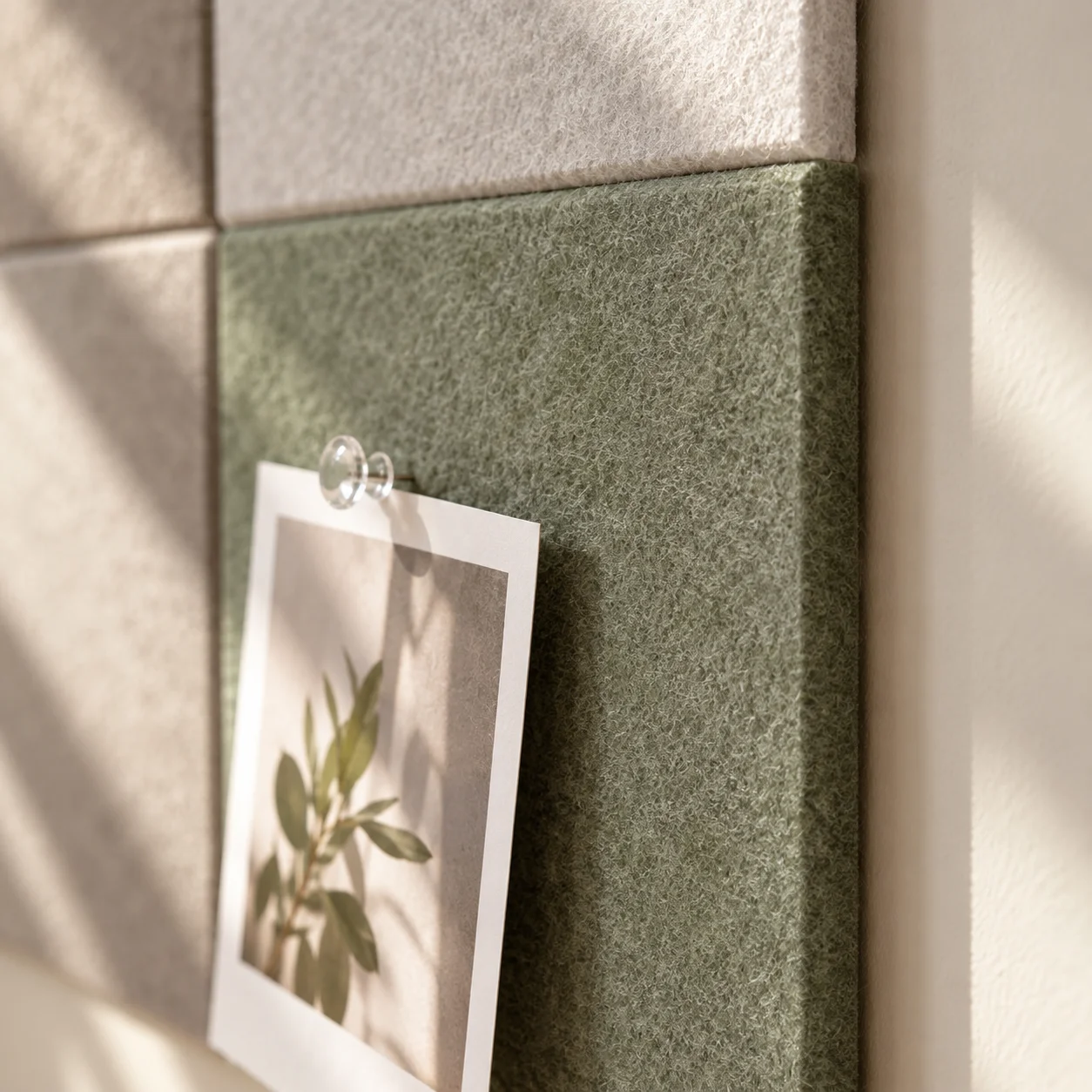
It's worth being clear about what it isn't: it is not an acoustic insulator or sound treatment, it isn't meant to hold heavy objects, and its adhesive hold depends on the type of wall, so it's worth checking before loading it. It is a surface for organising light information in view; nothing more, and nothing less.
Does it make sense for you?
It makes sense if you want a wall surface to keep notes, cards and references in view, and you like being able to compose it to your measure. It makes less sense if you're after sound treatment, or if you need to hang objects with weight.
Before buying, check that what you want matches what these tiles do.
- I want a wall surface for notes, cards and light references.
- I'm interested in composing the surface from pieces, to fit my wall.
- I understand it isn't an acoustic insulator or a support for heavy objects.
- I'll check the adhesive hold on my type of wall before loading it.
Twelve Morandi-toned felt pieces for organising light information on the wall. Read the editorial profile.
View profile →Do the felt tiles insulate a room from sound?+
No. They are a felt surface for organising light information; they are not meant as acoustic insulation or sound treatment.
How do they attach to the wall and how much weight do they hold?+
They attach with double-sided adhesive pads and hold paper with transparent push pins. They are meant for light information —notes, cards, photos—, not heavy objects, and adhesive hold depends on the type of wall.
- 1. Vieshful — felt tiles product information (manufacturer)