SwitchBot Meter Pro: measuring the climate we can't see
A room's temperature and humidity change through the day even when nothing looks different. Measuring them is how you start to notice.
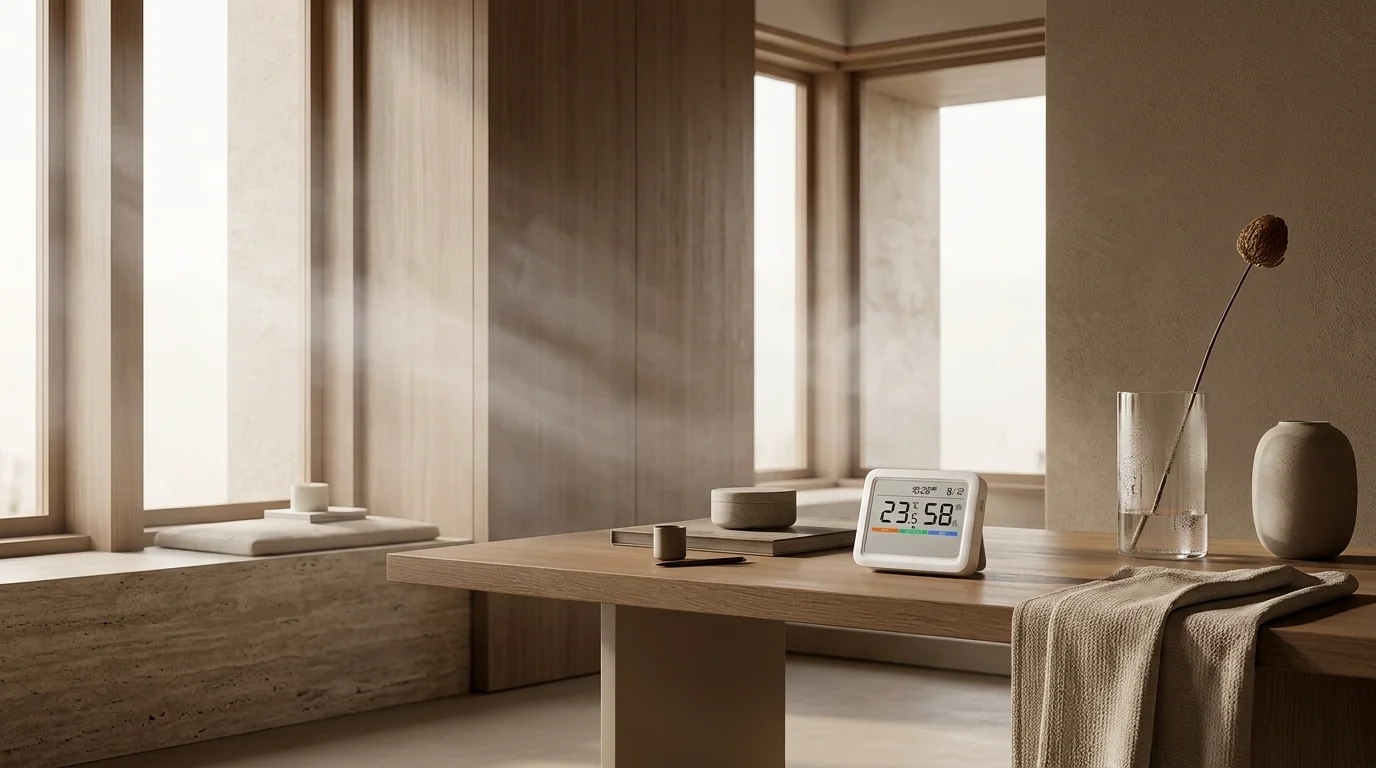
A room looks stable. We see the same walls, the same furniture, the same light at this hour as always. And yet, between morning and afternoon, something in it has changed without our noticing: its temperature and its humidity. A space's climate shifts continuously, below what we perceive. This article is about that —the climate we don't see— and what happens when we decide to measure it.
What we feel, we can't always measure
We notice that a room feels "stuffy", "cool" or "damp", but that impression is hard to pin down. It depends on what we were wearing, where we came from, the time of day. Two people can walk into the same room and describe it in opposite terms. The sensation is real, but it slips away: it changes with us and leaves no record.
The climate changes even when the room doesn't
A room's visual scene can hold still while its climate transforms. Sun through the window raises the temperature in one spot; cooking or drying clothes adds humidity; night cools and dries the air. None of it shows. The room "is the same", but the air filling it is not.
A space's climate —its temperature and humidity— changes continuously and, most of the time, below our attention. We notice the extremes; we miss almost everything in between.
Temperature and humidity
Two variables describe much of that climate. Temperature, which we usually sense well. And relative humidity, which we can almost never estimate and which nonetheless changes how a given temperature feels: dry air and humid air at the same degrees don't feel alike. Measuring both at once gives a fuller picture than either one alone.
Comfort isn't a universal number
It is tempting to look for "the right figure" of temperature or humidity. But there is no single number that works for everyone, for every room, or for every season. What feels comfortable depends on the person, the activity, the clothing and the use of the room. So we don't propose targets here: we propose observing.
Don't chase a number. Watch your own patterns for a few days before drawing conclusions: what matters is how your space changes and how it feels to you, not matching an ideal figure someone published.
Measuring the changes
Measuring isn't taking a single snapshot but following a trend. A monitor's value lies less in this instant's figure than in the curve it traces across the day: when it rises, when it falls, what sets it off. That is where the invisible climate starts to become legible.
The SwitchBot Meter Pro refreshes its reading every four seconds. That short cadence is what lets you watch the climate move almost in real time, rather than checking it now and then.

SwitchBot Meter Pro
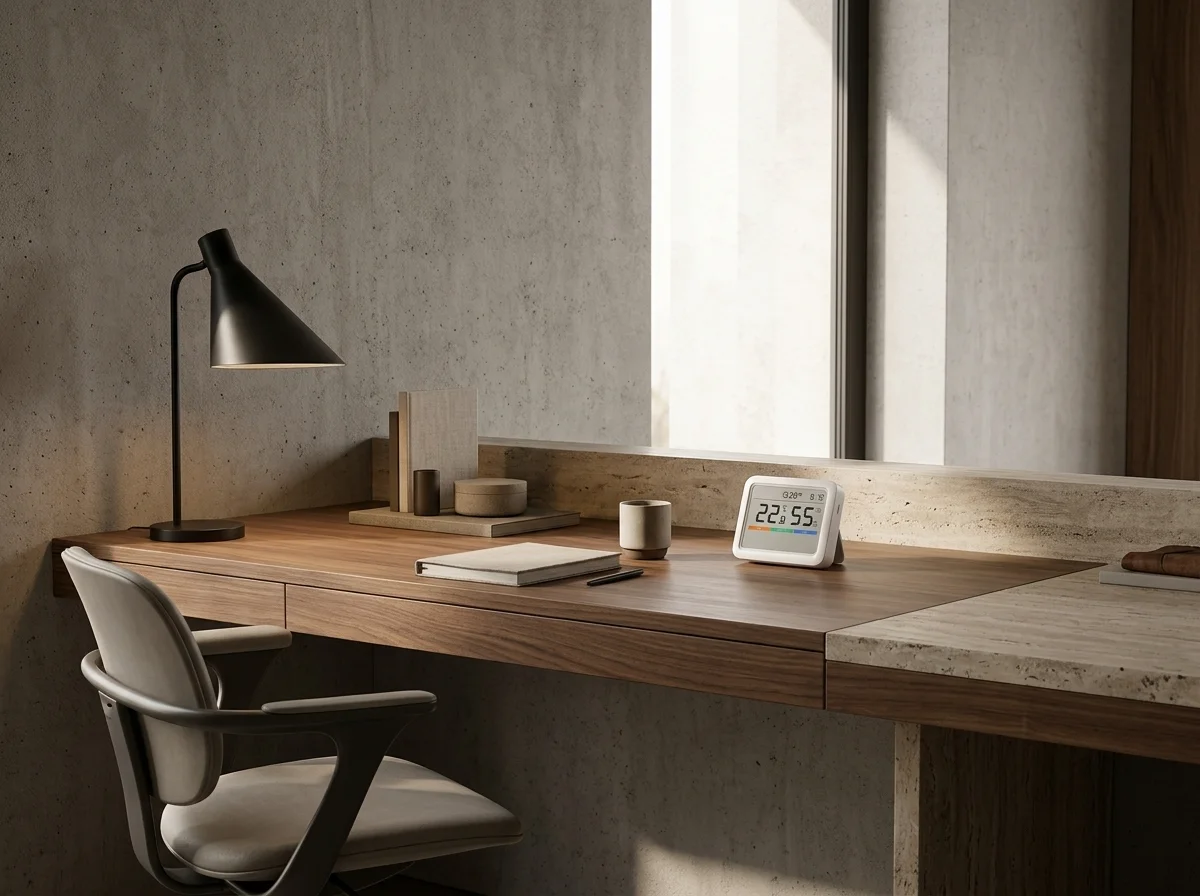
The SwitchBot Meter Pro is a modest tool for this task: it measures temperature (−20 to 80 °C) and relative humidity (0 to 99 %), shows them on a direct-reading screen and adds a comfort indicator that combines the two. It is a small object —92 × 79 × 25 mm, 154 g with batteries— that runs on two AA cells for about twelve months and sits on a surface or mounts on a wall. It doesn't aim to decide for you; it aims to show you something.
Without a Hub / With a Hub
It helps to understand what it does on its own and what needs company, so you don't buy it expecting what it doesn't offer out of the box.
What we can learn about a space
When the climate becomes legible, questions about the space begin to appear. Why this room takes so long to warm up. Why humidity always rises at the same hour. Why one corner behaves differently from the rest. These aren't automatic answers: they are observations that help you know your home and decide, with more judgement, what —if anything— you want to change. The tool doesn't interpret for you; it gives you material to interpret.
Limitations
Measuring the climate has limits worth being clear about from the start.
The comfort indicator is guidance that combines temperature and humidity; it is not a health diagnosis or a universal measure of wellbeing. The connection is Bluetooth Low Energy —with a range of up to 120 m line-of-sight, much less between real walls— and local records hold a limited history unless paired with the app and, for long spans, a Hub. It is for observing a space, not for drawing definitive conclusions about it.
Does it make sense for you?
It makes sense if you want to understand how a room's climate behaves before acting on it, and if a local reading and its recent history are enough. It makes less sense if you expect an automatic comfort verdict, or if you need remote control and integration without being willing to add a Hub.
Before buying, check that what you want matches what this tool actually does.
- I want to observe how temperature and humidity change, not hit an ideal figure.
- A screen reading and recent history over Bluetooth are enough for me.
- I understand that remote and ecosystem features depend on a separate Hub.
- I don't expect a comfort or health diagnosis, but data to observe.
A temperature and humidity monitor with a comfort indicator and a record of its trend. Explore it in 3D and read the full editorial profile.
View profile →Do I need a Hub to observe my room with the Meter Pro?+
No. The on-screen reading and the recent history over Bluetooth need no Hub. A Hub is needed for remote features, ecosystem integration and long-term history.
Is there an ideal temperature or humidity I should reach?+
There is no universal number. What feels comfortable depends on the person, activity, clothing, season and use of the room. The value of measuring is in observing your own patterns, not matching a published figure.
- 1. SwitchBot — official Meter Pro specifications (manufacturer)